Global web icon
mayoclinic.org
https://www.mayoclinic.org/diseases-conditions/hir…
Hirsutism - Symptoms & causes - Mayo Clinic
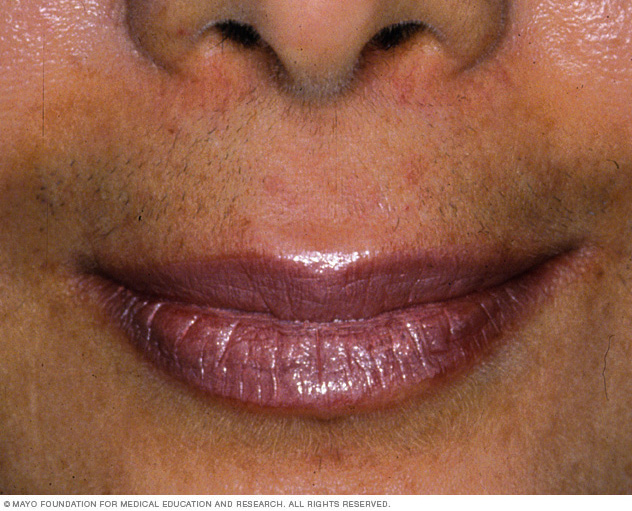
Learn about causes and complications of unwanted excess hair in women and what self-care methods and medical treatments are effective.
Global web icon
clevelandclinic.org
https://my.clevelandclinic.org/health/diseases/145…
Hirsutism: What It Is, In Women, Causes, PCOS & Treatment
Hirsutism doesn’t have a known cause, but it’s a symptom of other conditions, including polycystic ovary syndrome. Treatment options include weight loss, medications and other hair removal options.
Global web icon
osmosis.org
https://www.osmosis.org/answers/hirsutism
Hirsutism: What Is It, Causes, Treatment, and More | Osmosis
Although hirsutism is most often a benign condition, it can be caused by underlying medical conditions, including polycystic ovary syndrome, androgen secreting tumors, or endocrine disorders.
Global web icon
nih.gov
https://www.ncbi.nlm.nih.gov/books/NBK470417/&lang…
Hirsutism - StatPearls - NCBI Bookshelf
Hirsutism is the growth of excessive male-pattern hair in women after puberty. It affects facial and body areas dependent on androgens, namely mustache and beard, pubic hair, buttocks, and thighs. It is a frequent reason for dermatological consultation.
Global web icon
childrenshospital.org
https://www.childrenshospital.org/conditions/exces…
Excessive Hair Growth (Hirsutism) | Boston Children's Hospital
Many women with hirsutism don't have a hormonal imbalance or they have hair that is more sensitive to small amounts of hormones. About half of women with excessive hair growth do have an underlying hormonal condition that makes hair grow thicker and faster. Some medications can stimulate excessive hair growth as well.
Global web icon
uptodate.com
https://www.uptodate.com/contents/pathophysiology-…
Pathophysiology and causes of hirsutism - UpToDate
Hirsutism may be the initial and possibly only sign of androgen excess, the cutaneous manifestations of which may also include acne and male-pattern hair loss (androgenetic alopecia). The pathophysiology and causes of androgen-mediated hair growth are reviewed here.
Global web icon
drugs.com
https://www.drugs.com/health-guide/hirsutism.html
Hirsutism Guide: Causes, Symptoms and Treatment Options
Hirsutism can be caused by abnormally high levels of androgens or abnormal stimulation of hair follicles even when androgen levels are normal.
Global web icon
upmc.com
https://www.upmc.com/services/womens-health/condit…
Hirsutism Causes, Symptoms, and Treatments - UPMC
Hirsutism is a medical condition that causes women to have excessive hair growth in a male pattern on their face, chest, and back. This abnormal hair grown is usually caused by high levels of androgen hormones.
Global web icon
massgeneral.org
https://www.massgeneral.org/children/hirsutism
Hirsutism: Causes and Symptoms - Massachusetts General Hospital
Causes of hirsutism include: Hyperandrogenism: a condition in which females make more androgens (male hormones) than usual. While the main role of androgens is to help develop male features, all females have small amounts of androgens in addition to female hormones.
Global web icon
nhs.uk
https://www.nhs.uk/symptoms/hirsutism/
Excessive hair growth (hirsutism) - NHS
Hirsutism is where women have thick, dark hair on their face, neck, chest, tummy, lower back, buttocks or thighs. See a GP if it's a problem for you, particularly if you've noticed other symptoms such as irregular periods. This might be caused by a medical condition that can be treated.